France, 1838–1857
A decorative set of three French faïence plates produced by the Fabrique d'Émaux de Rubelles, near Melun, each incorporating a vivid emerald-green émaux ombrants medallion.
The three plates are individually decorated with a fruiting branch, a figural scene and a rural landscape. Each moulded image appears in relief beneath the translucent green enamel, creating striking variations of light and shade. The medallions are framed by broad, gently scalloped borders glazed in rich caramel and brown tones.
The émaux ombrants technique was a distinctive speciality of the Rubelles factory during the mid-nineteenth century, using moulded relief beneath translucent coloured enamel to create an almost pictorial effect through differing depths of colour. Examples from the factory are represented in French museum collections.
Maker: Fabrique d'Émaux de Rubelles
Origin: Rubelles, near Melun, France
Date: 1838–1857
Material: Faïence fine
Technique: Émaux ombrants
Dimensions: Each H 2 cm × D 22 cm
Marks: Impressed oval Fabrique d'Émaux de Rubelles factory mark to reverse
Condition: I want you to check these three physically before we finalise this line. From the photographs I can see expected surface scratching/wear, particularly to the green medallions, but I can't safely determine whether there are any small rim chips or hairlines.

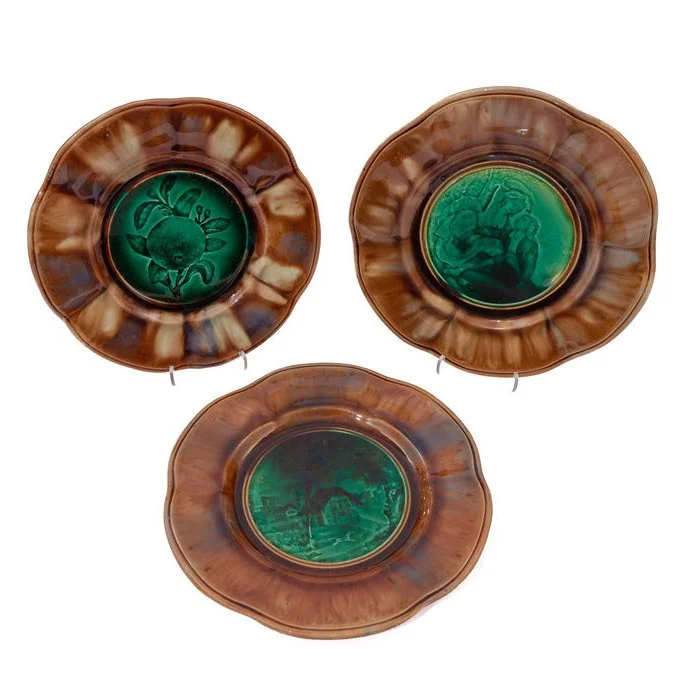 Image 1 of 10
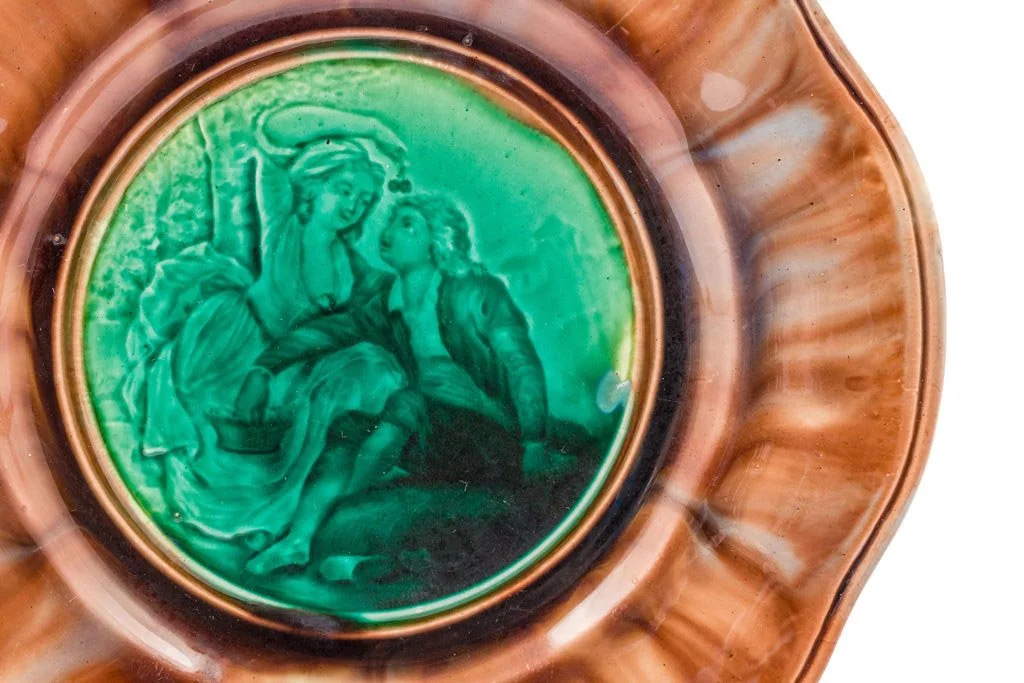 Image 2 of 10
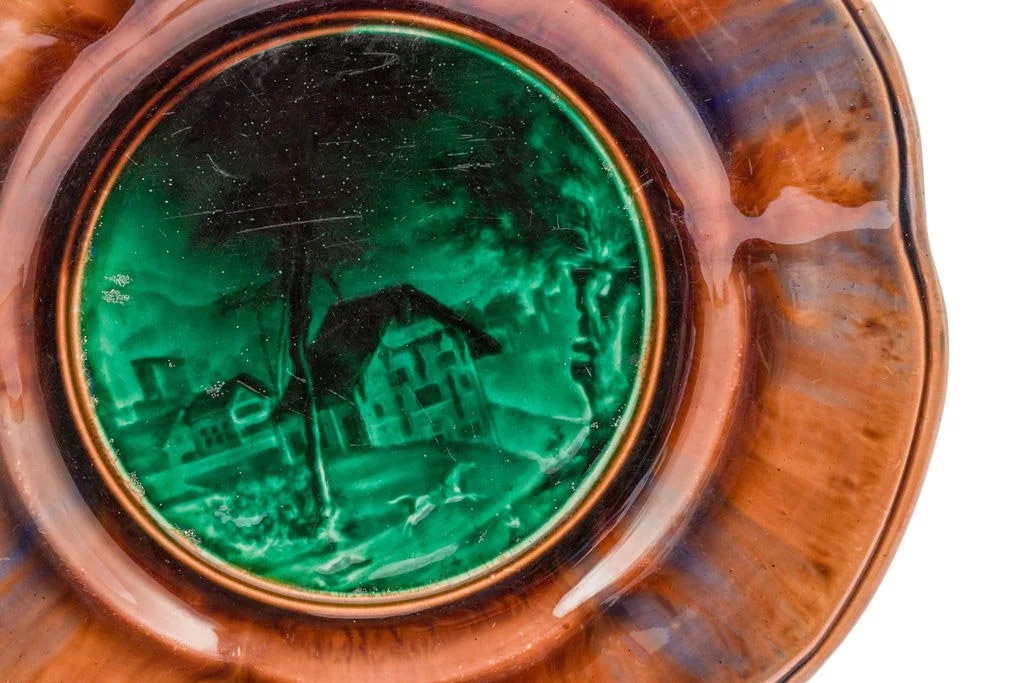 Image 3 of 10
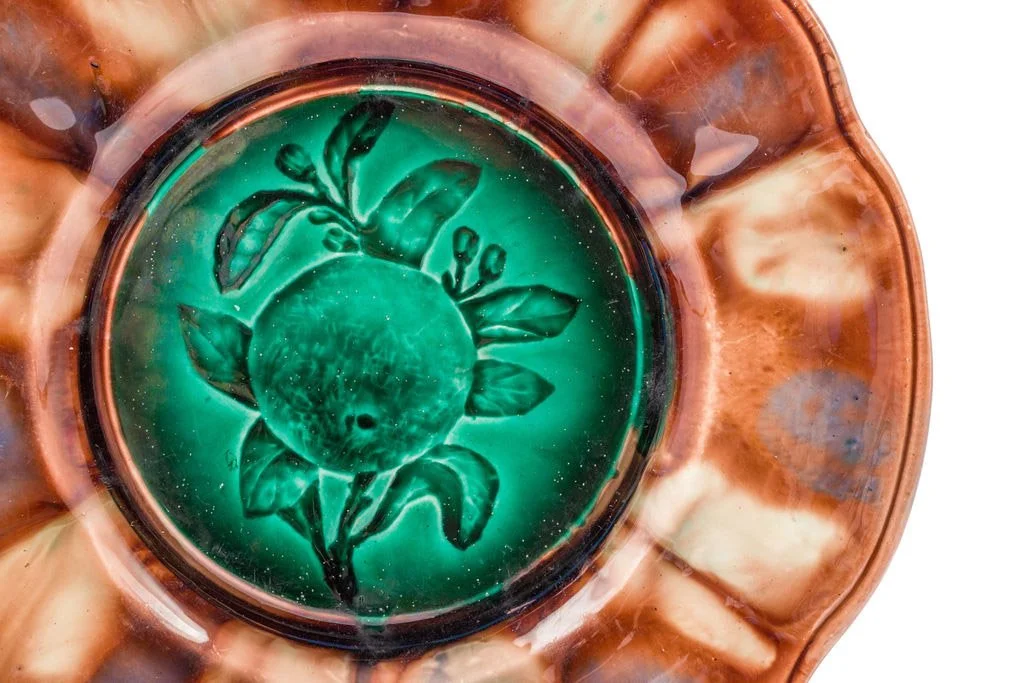 Image 4 of 10
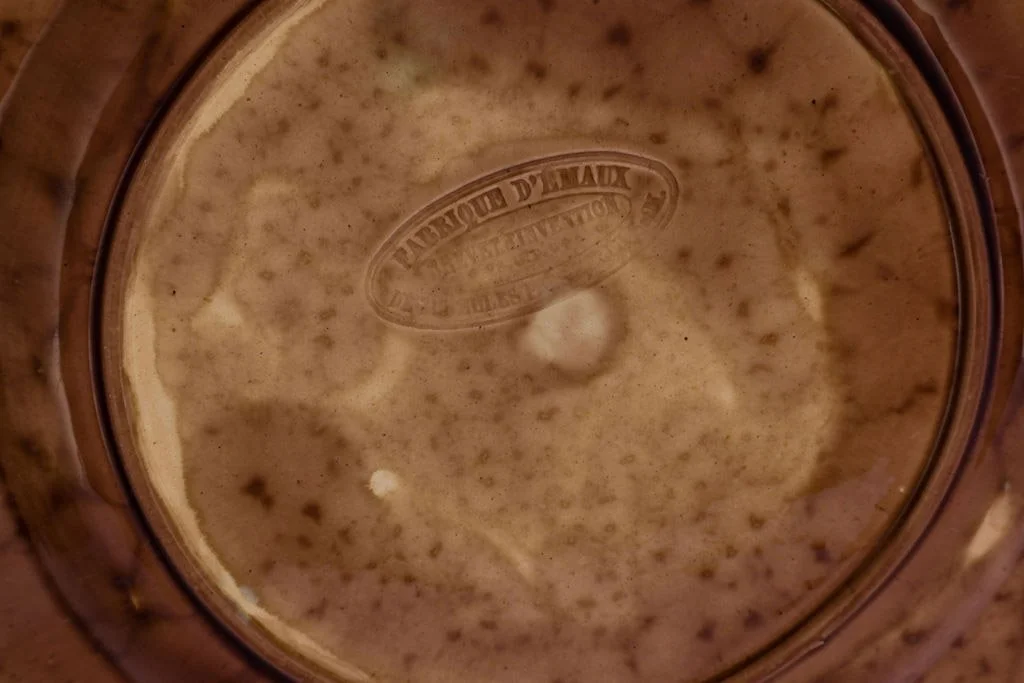 Image 5 of 10
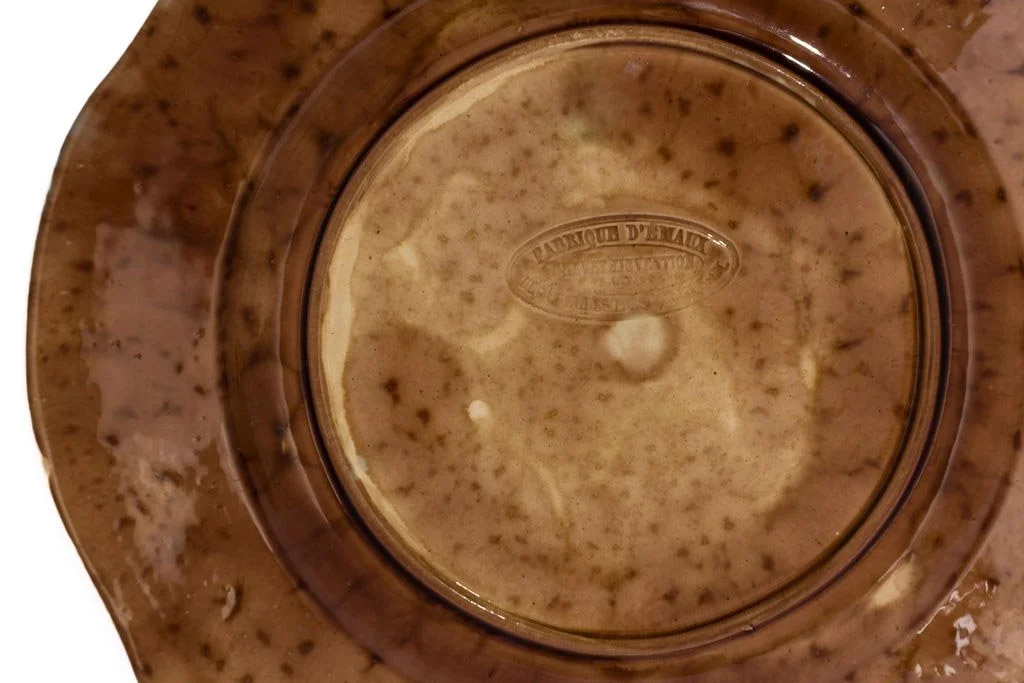 Image 6 of 10
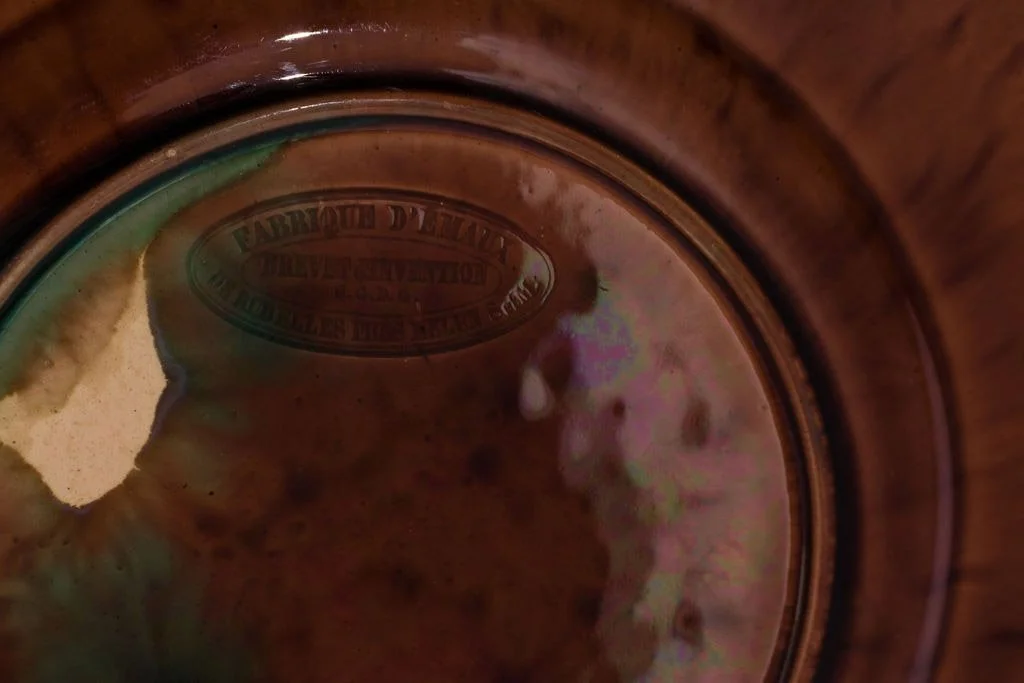 Image 7 of 10
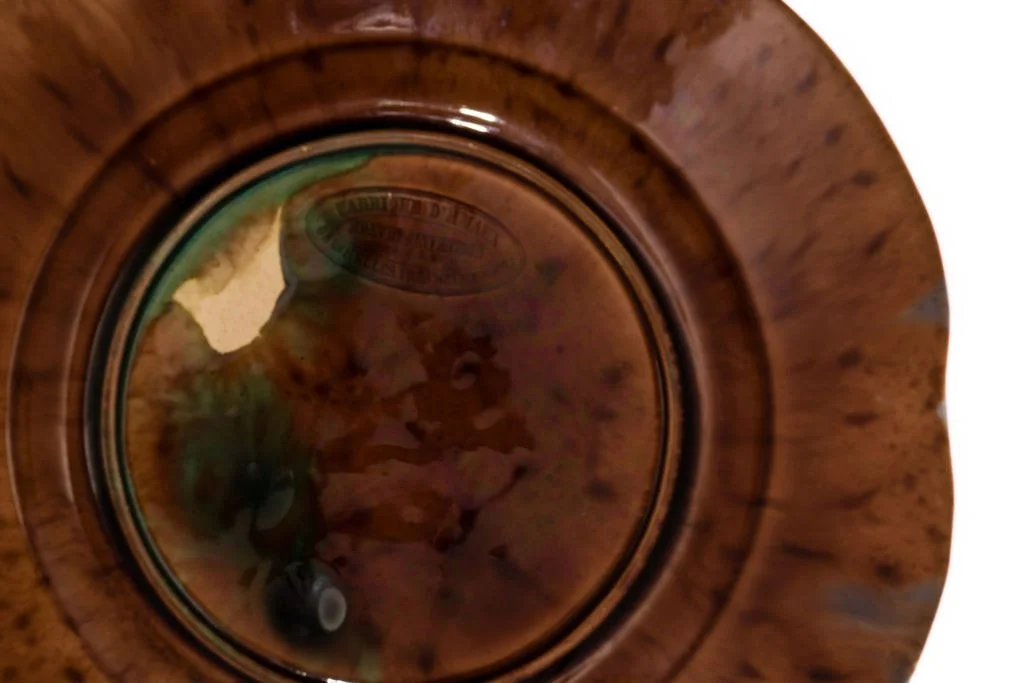 Image 8 of 10
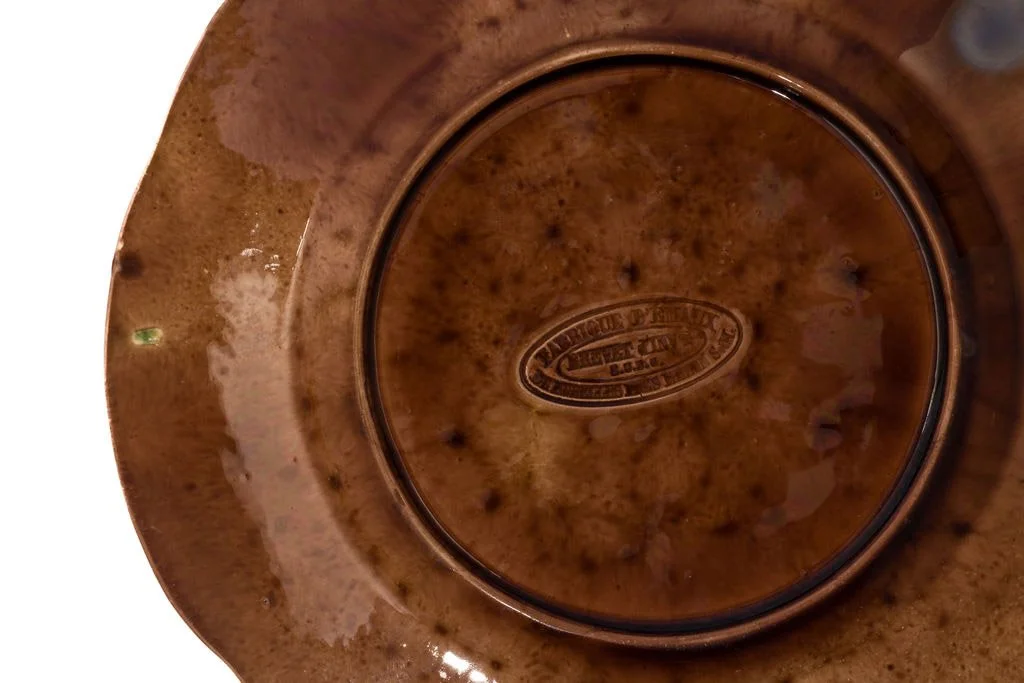 Image 9 of 10
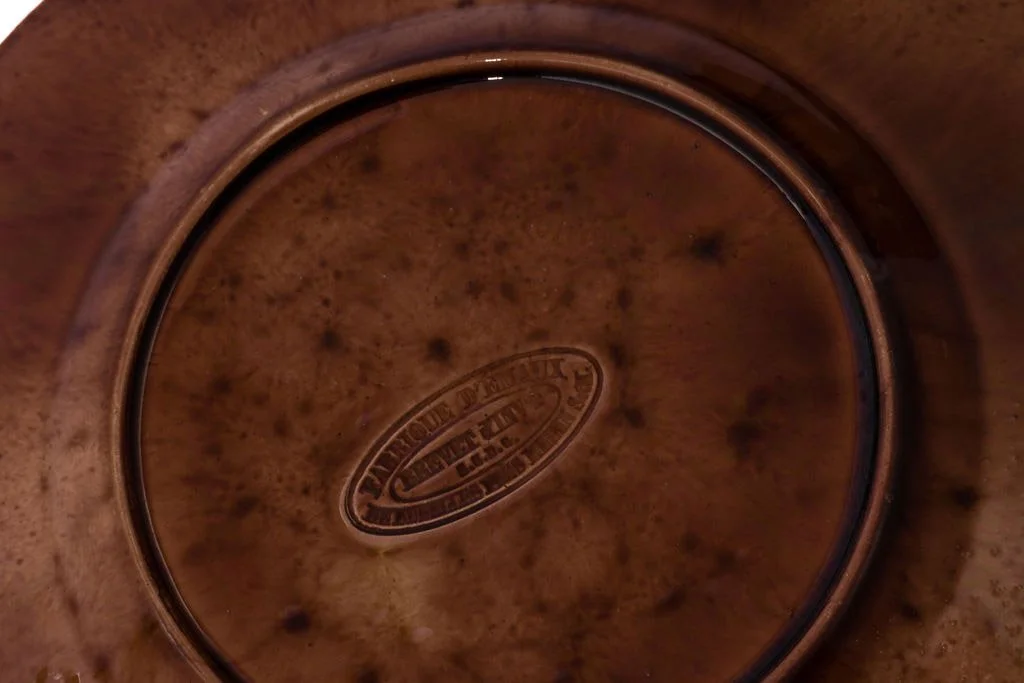 Image 10 of 10