England, 19th century
A charming nineteenth-century English blue and white transfer-printed serving dish, decorated with the enduring Willow pattern, one of the most recognisable designs in British ceramic history.
The shallow circular dish features the familiar chinoiserie landscape of pagodas, pavilions, trees, figures, boats and birds, rendered in rich cobalt-blue tones against a white earthenware ground. An intricate arrangement of geometric and floral borders frames the central scene, giving the piece a pleasingly detailed and balanced composition.
Raised upon a low circular foot, the dish has a more architectural profile than a conventional plate, suggesting its original place within a larger table service. The gently elevated form adds to its decorative character.
The Willow pattern emerged in Britain during the late eighteenth century and became an enduring feature of nineteenth-century transfer-printed pottery. Its romanticised Chinese landscape reflects the fascination with Oriental-inspired decoration that influenced British ceramic production during this period.
Measuring 21.5 cm in diameter, this attractive footed dish retains the character and patina of an antique piece. Its distinctive form and traditional blue and white decoration make it an appealing example of nineteenth-century English tableware, particularly suited to decorative display.
Origin: England
Date: 19th century
Pattern: Willow
Material: Blue and white transfer-printed earthenware
Dimensions: H 4.5 cm × D 21.5 cm
Marks: Unmarked
Condition: Antique condition with overall glaze crazing and age-related discolouration. Hairlines are present to the underside, extending from the rim, together with general surface and rim wear. The dish remains decorative and displays well.

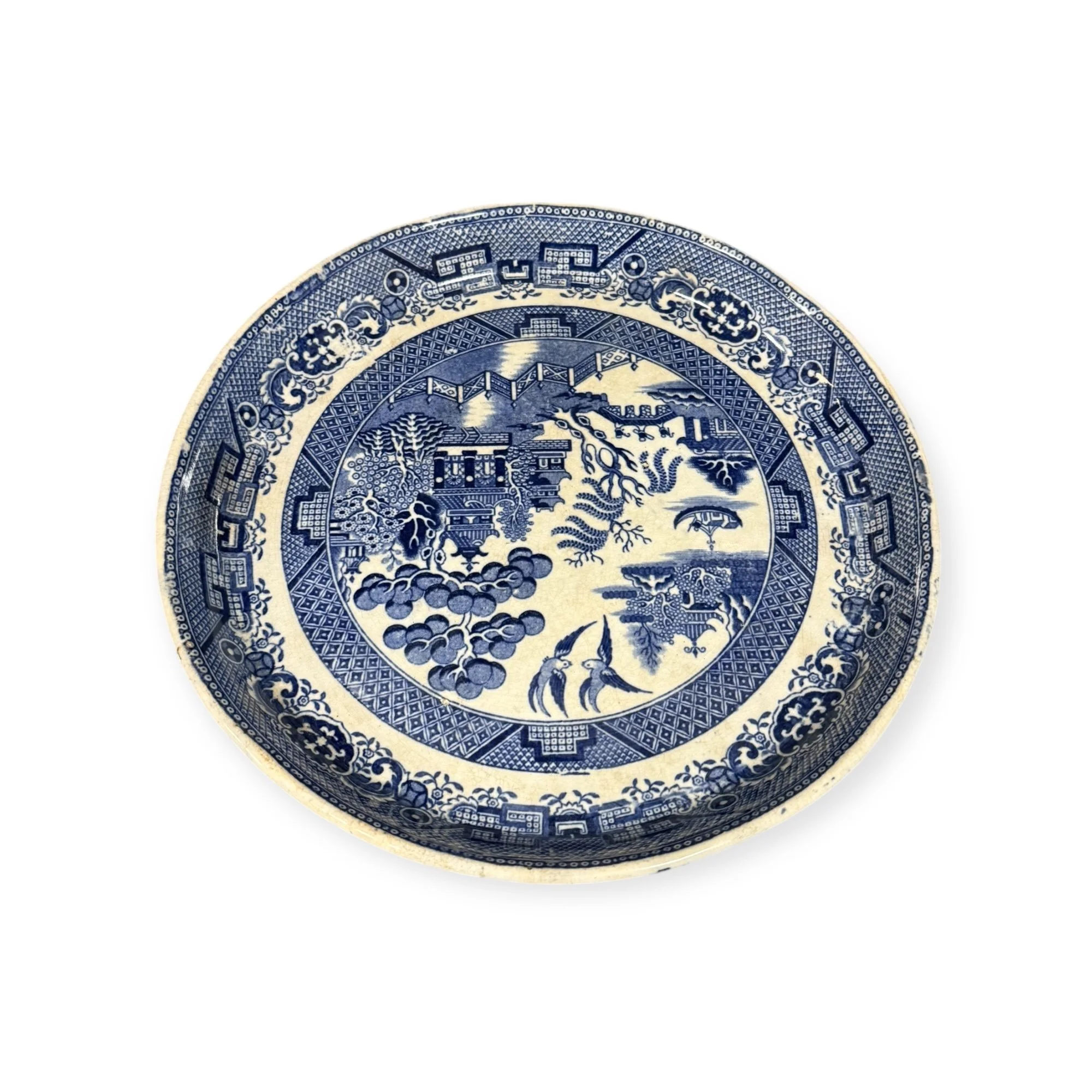 Image 1 of 7
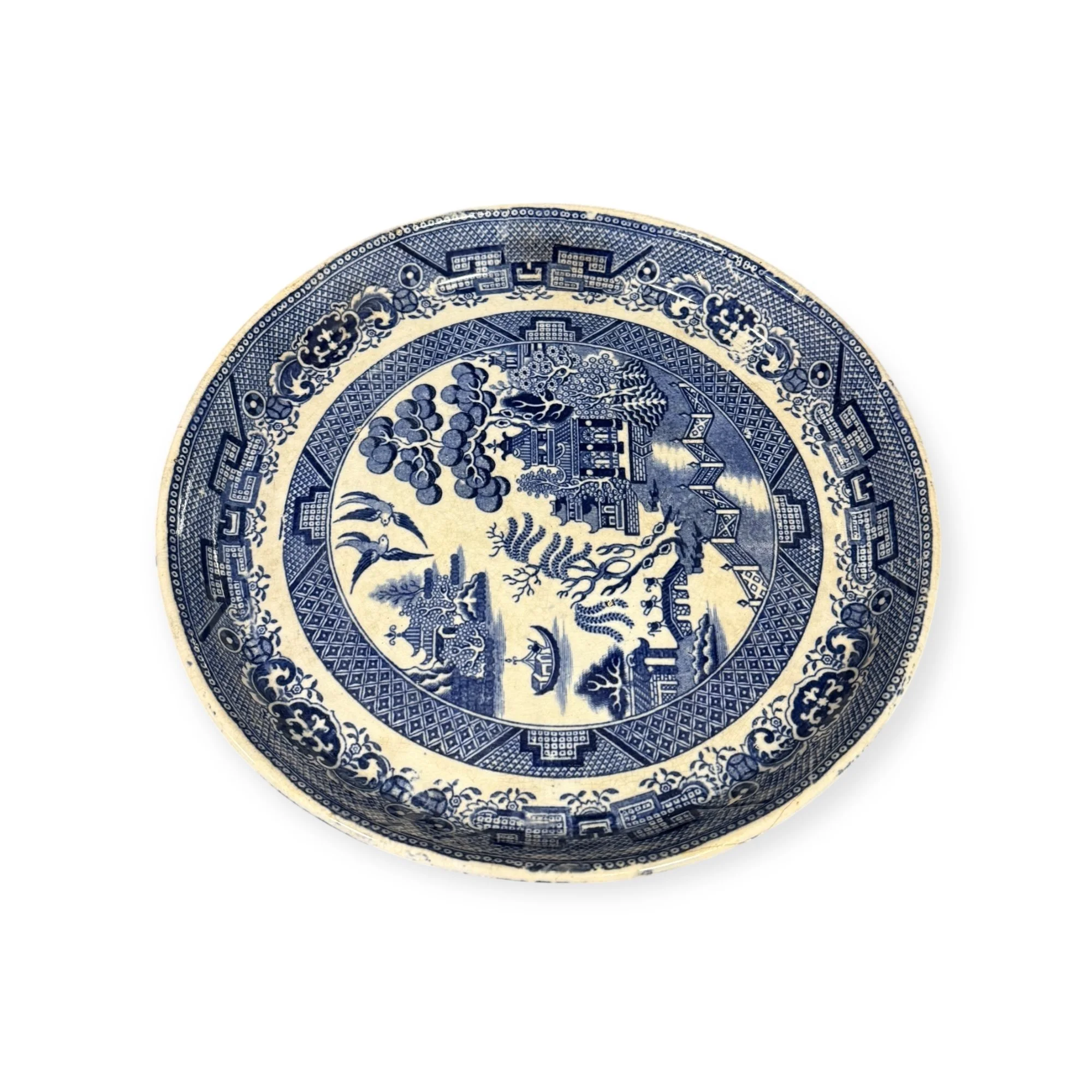 Image 2 of 7
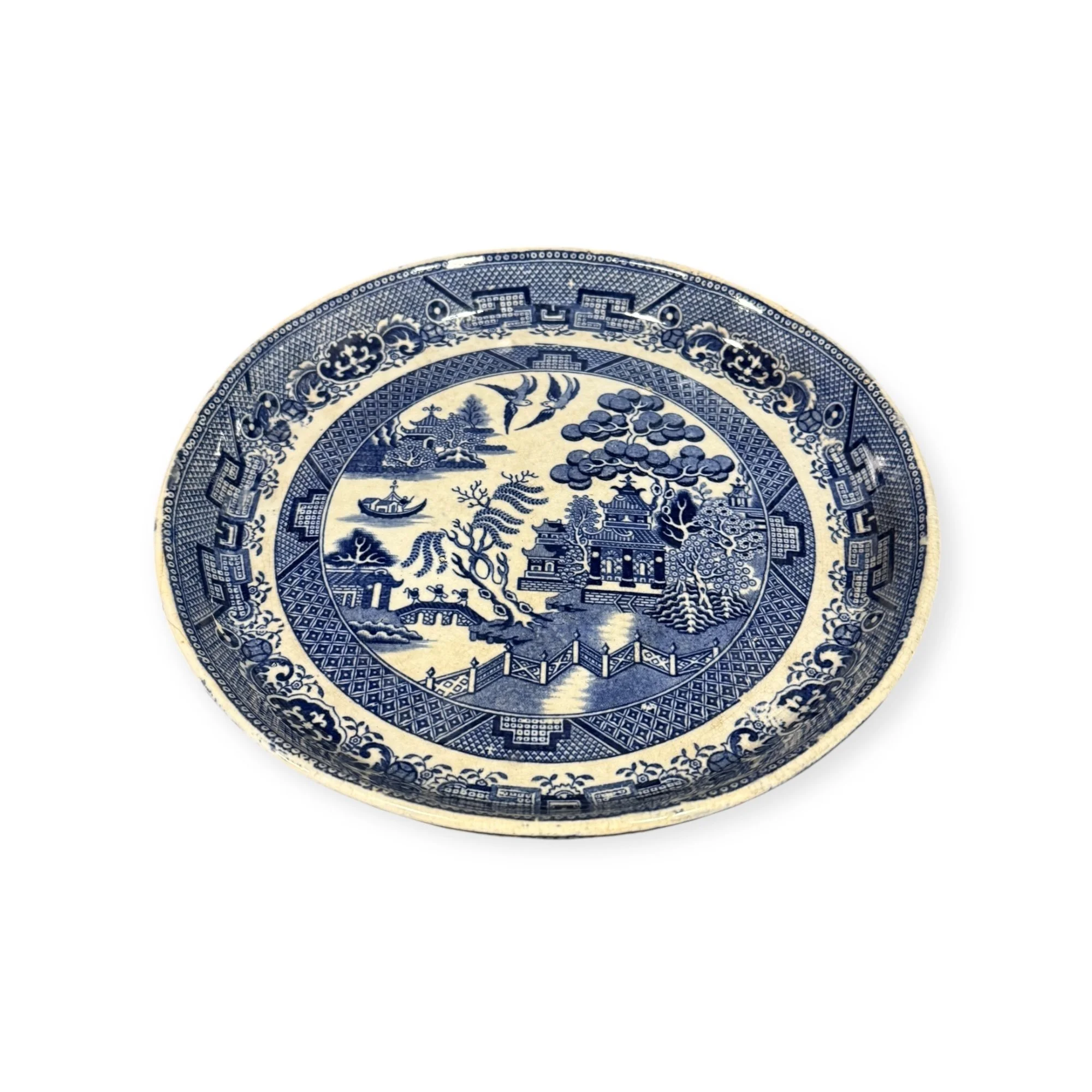 Image 3 of 7
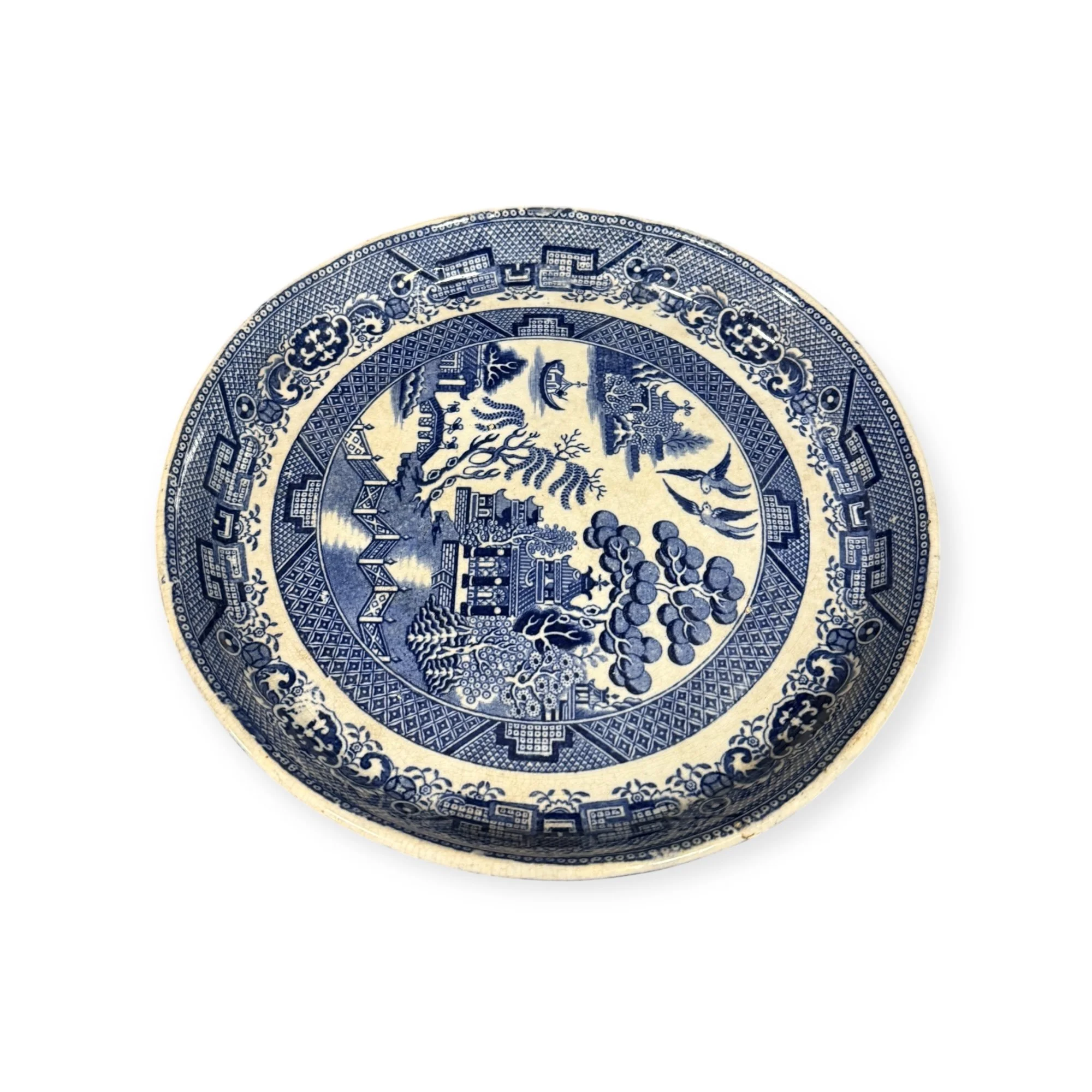 Image 4 of 7
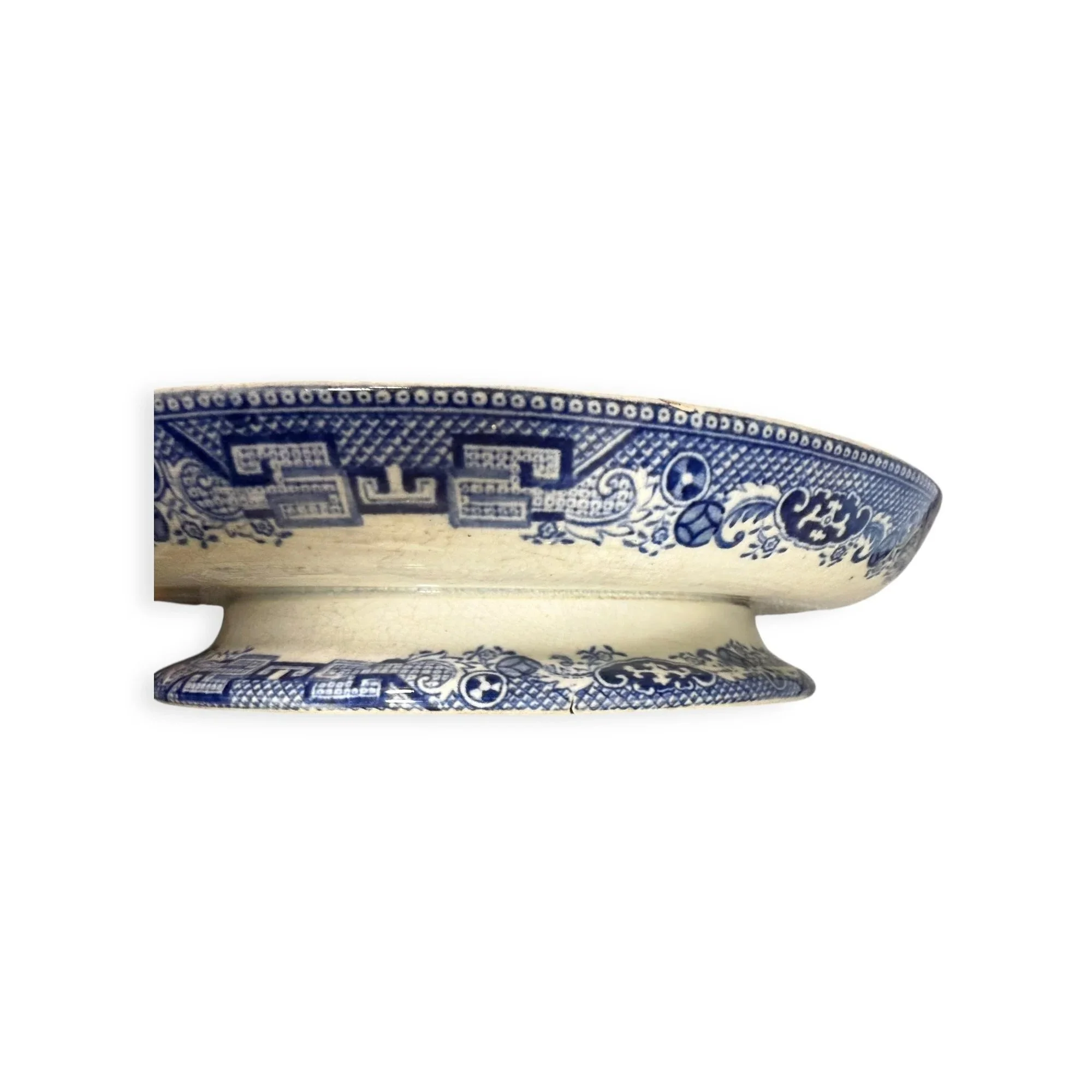 Image 5 of 7
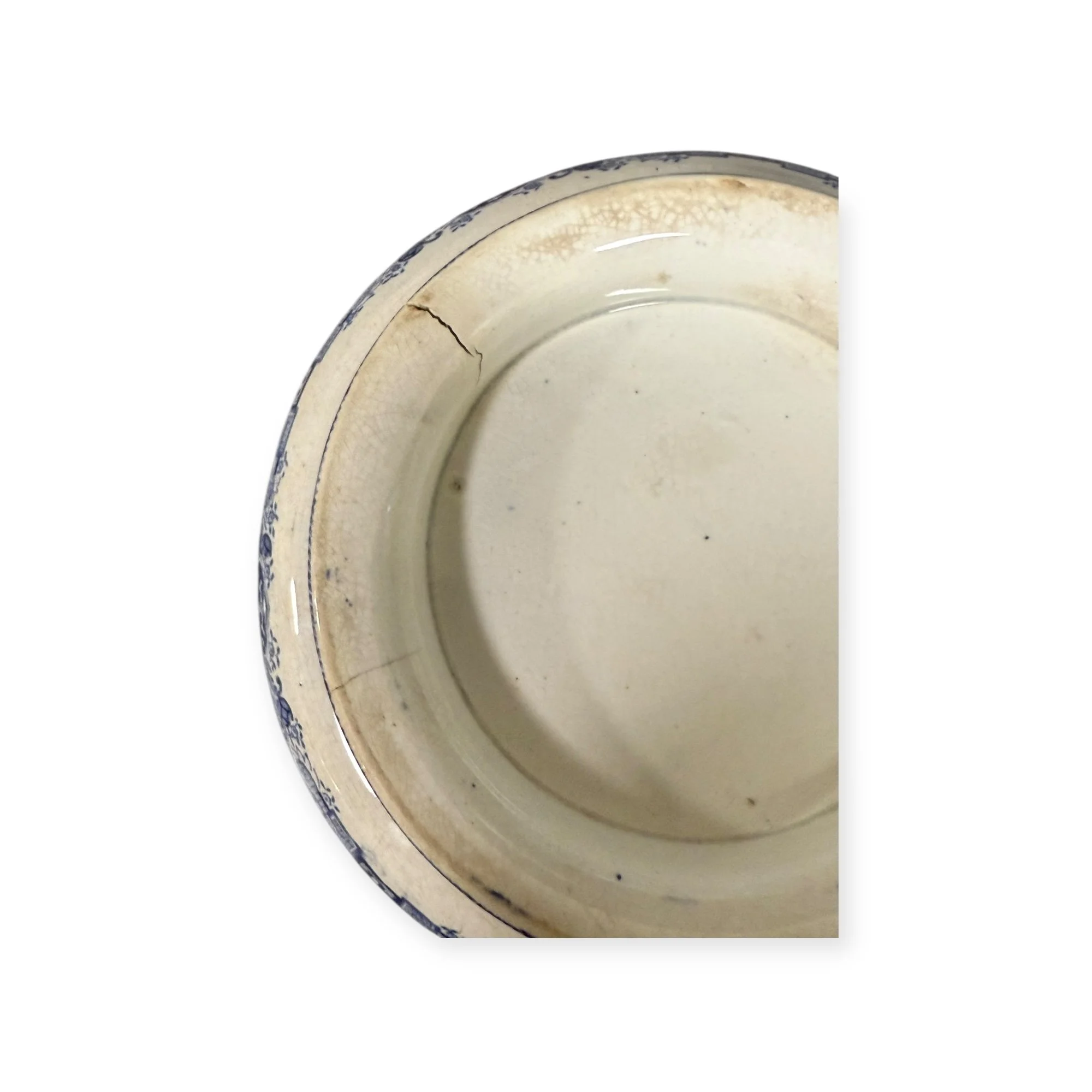 Image 6 of 7
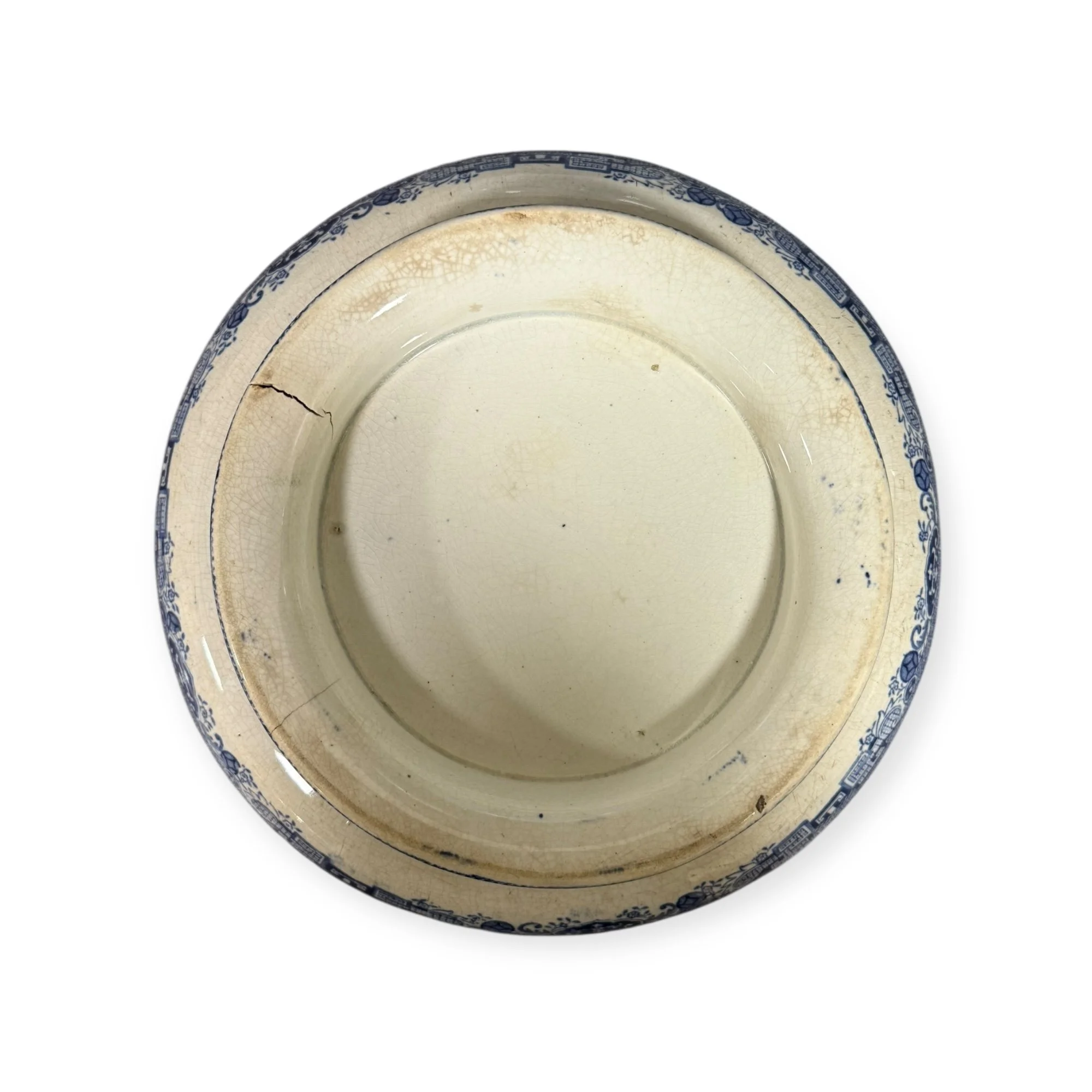 Image 7 of 7