
 Image 1 of 5
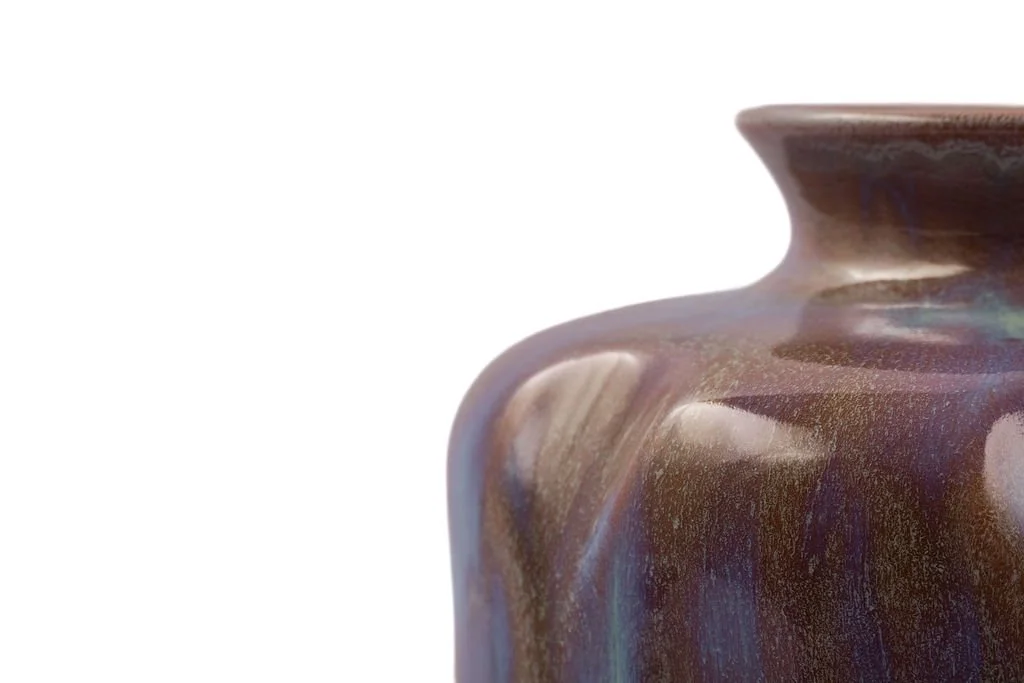 Image 2 of 5
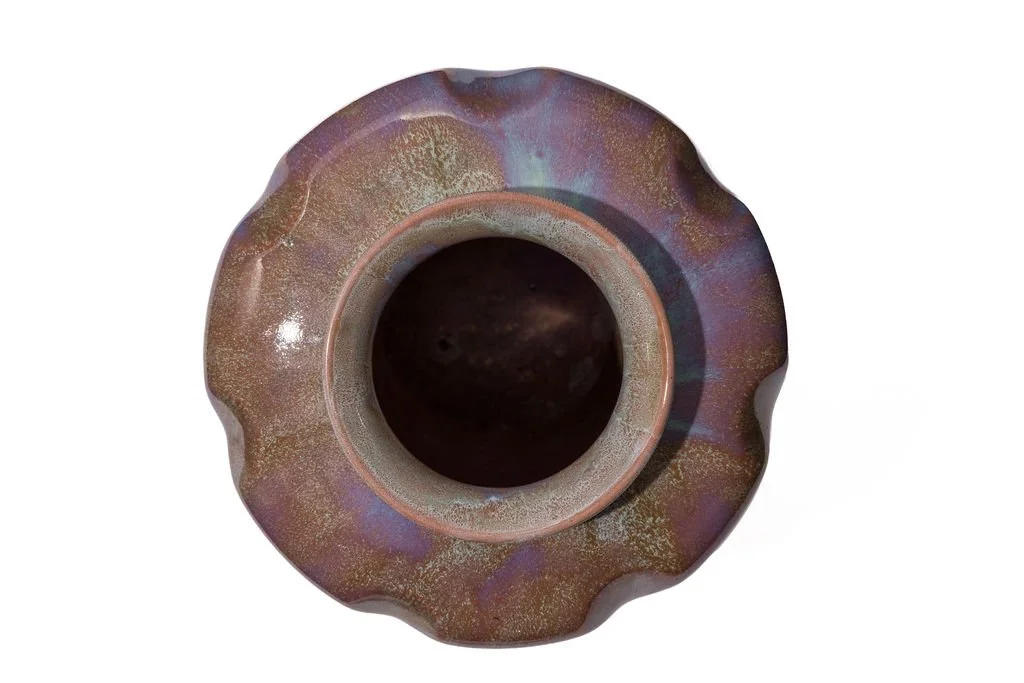 Image 3 of 5
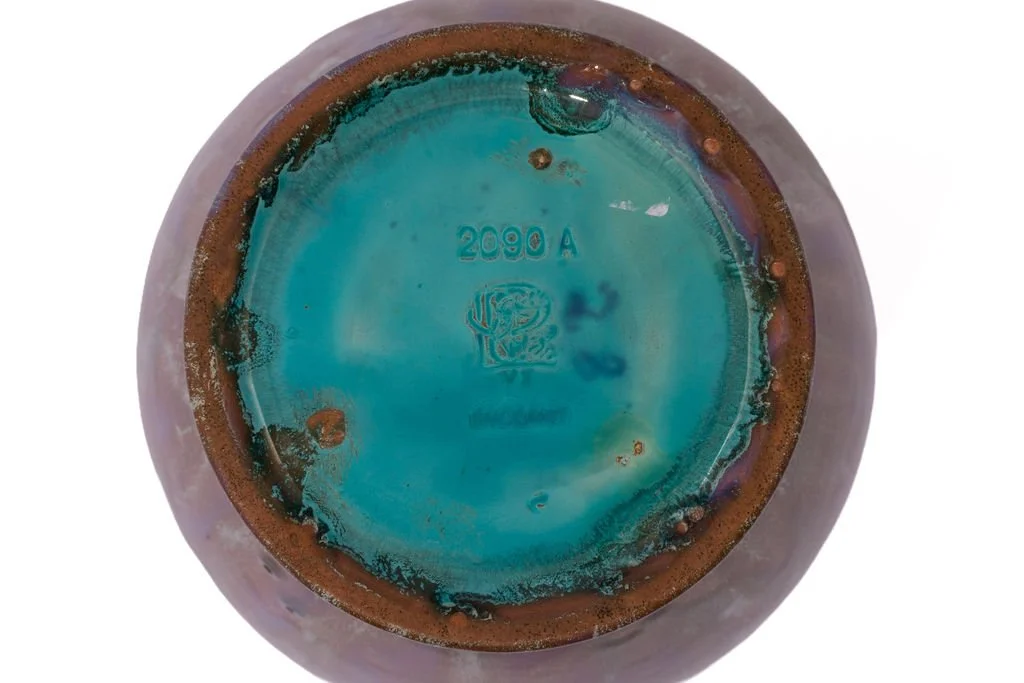 Image 4 of 5
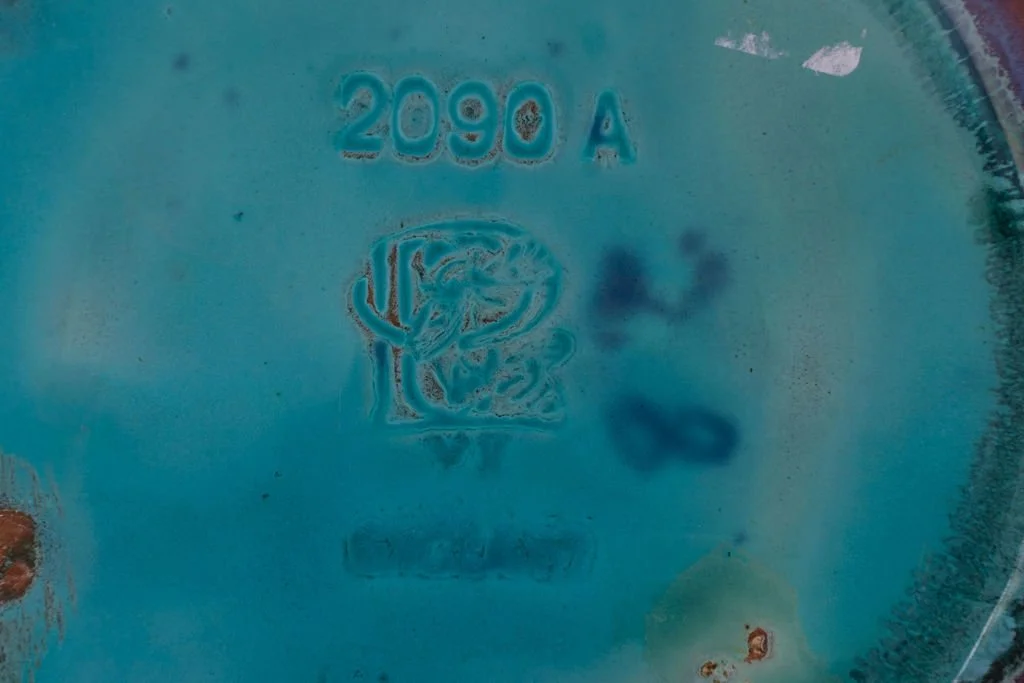 Image 5 of 5
England, 1906
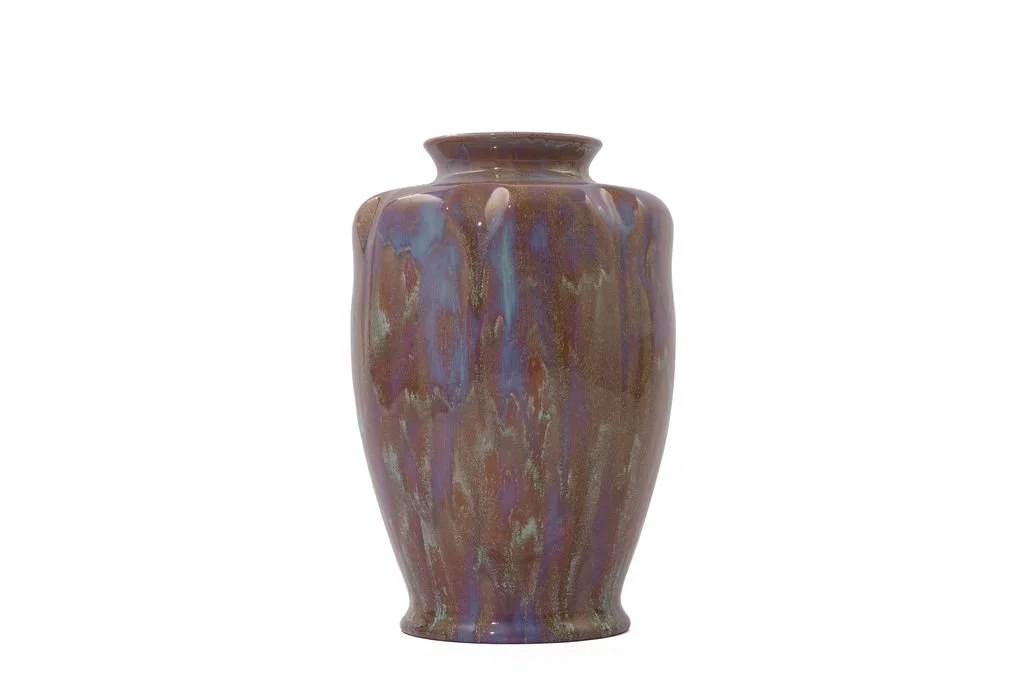
A substantial early Pilkington’s Lancastrian pottery vase, dated 1906, distinguished by its richly varied, flowing ‘Jun’-type glaze and elegant ovoid form.
The tall body is moulded with softly depressed vertical details around the shoulder, creating a gently lobed profile beneath the short, everted neck. The glaze moves through muted brown, mauve and violet into passages of blue and turquoise, with cream-coloured trails flowing vertically from the shoulder. These subtle transitions of colour give the surface considerable depth and movement.
The restrained form provides an effective canvas for Pilkington’s experimental glaze treatments, which became central to the reputation of the Lancastrian pottery during the opening years of the twentieth century. The combination of carefully controlled form and unpredictable glaze effects reflects the artistic ambitions of British art pottery during this period.
The underside bears the impressed factory mark, shape number 2090 A and the date code VI, corresponding to 1906. The documented shape and date add to the vase’s collecting interest, while its distinctive glaze makes each example individual in appearance.
Standing 26 cm high, this striking vase is an appealing example of early twentieth-century English art pottery, combining the simplicity of its form with the richness of Pilkington’s celebrated glaze experimentation.
Maker: Pilkington’s Lancastrian Pottery
Origin: Lancashire, England
Date: 1906
Period: Edwardian
Style: Arts and Crafts / English Art Pottery
Material: Glazed earthenware
Decoration: Flowing cream trails and multicoloured ‘Jun’-type glaze
Shape: 2090 A
Dimensions: H 26 cm
Marks: Impressed factory mark, shape number 2090 A and date code VI; later inscribed number 28
Condition: Good antique condition overall, with slight rubbing to the glaze, minor surface marks and crazing throughout consistent with age and use. Structurally sound, with no significant damage or restoration noted.
Provenance: Private collection, Norfolk; Sworders, Design, 27 January 2026, lot 32.